Attachment-Based Couples Therapy
Step out of attachment patterns that keep the same fight on repeat
Is this you?
- You feel disconnected from your spouse, even when you are in the same room
- You’re in a partnership where one person shuts down and the other chases
- You are avoiding conflict in marriage because every conversation seems to make it worse
- The thought has crossed your mind: I can’t be vulnerable with my partner, even when I want to be
- Your relationship feels one-sided, like you are doing the emotional work alone
You’re not broken. You’re stuck.
If you’re both tired of the same fight, that is enough reason to start
What is Couples Therapy?
Couples therapy is therapy where the relationship itself is the client. Not each partner separately. The thing the two people are doing together.
In couples therapy, the focus shifts from “who is right” to “what is happening between us.” Many couples arrive stuck in the same fight, misreading each other, or feeling distant despite wanting to be close. The fight is rarely about the dishes. It is about what each partner’s nervous system thinks is happening underneath.
Attachment-based couples therapy goes a step further than communication-skills work. It addresses the patterns underneath. Anxious attachment, avoidant attachment, the pursuer-distancer dance. Instead of treating one conflict at a time, the work changes the pattern itself. So the same fight stops being the only fight.
How Couples Therapy Can Help
- Feel less alone in your own relationship
- Understand the attachment style each of you brought into the relationship
- Trust that the connection will return after a fight
- Name the emotional triggers underneath the reactions
- Learn how to be vulnerable with your partner
Feel like a team again
The goal is feeling like a team again, even when you disagree.
My Approach
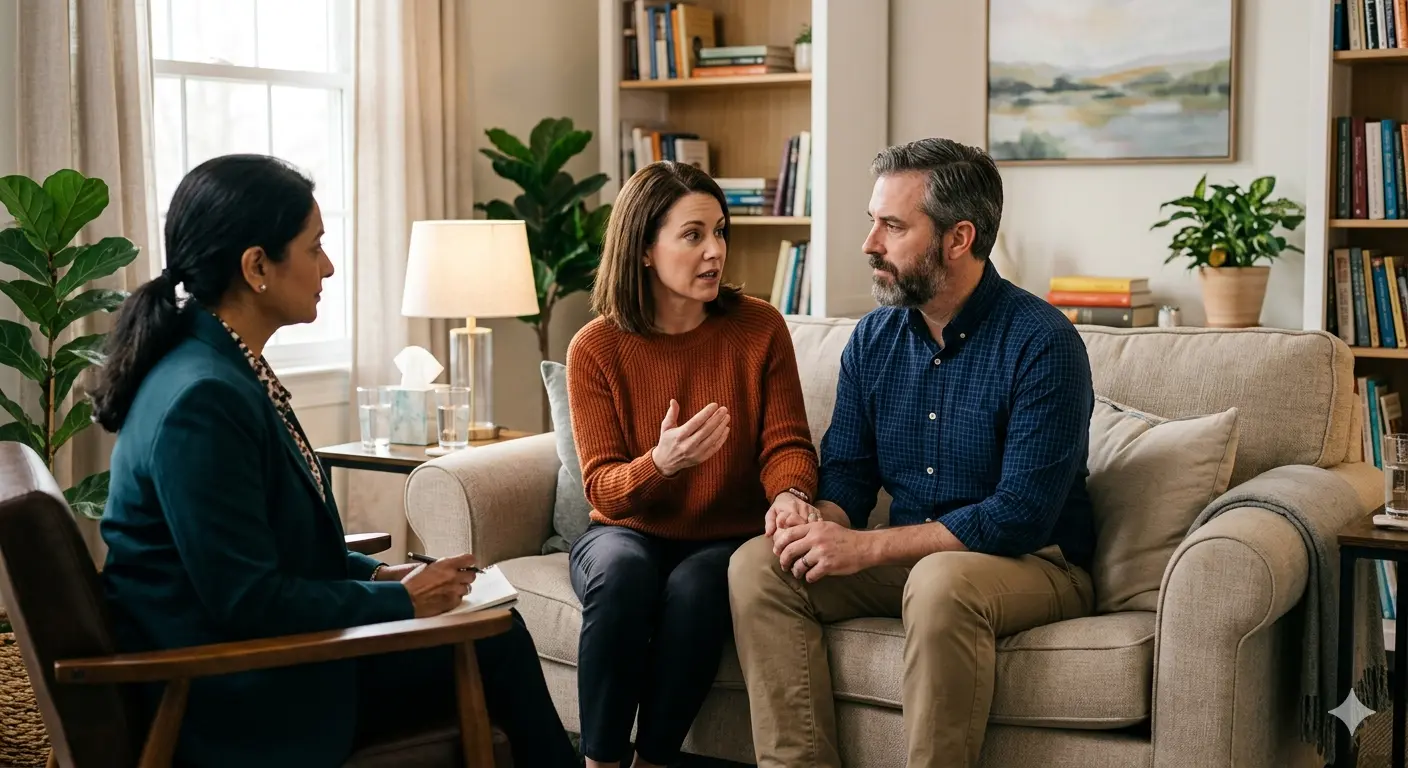
My approach is attachment-based, integrative, and grounded in 22 years of working with couples. As an attachment-based couples therapy practice, I help you both understand the patterns each of you brings, and what each of your nervous systems needs to feel safe with the other.
Treatment typically includes:
- A thorough first session with both of you to map the relationship and the patterns
- Attachment style couples therapy: identifying anxious, avoidant, and disorganized patterns with compassion
- Working in real time with what is happening between you, not just what each of you brought in
- Emotionally focused work to reach what is underneath the conflict
- Repair-and-return practices for ruptures that used to last days
The structure is simple. We name the pattern. We understand where it came from. We build a different one, slowly, together.
What to Expect
- Session length: 50 minutes
- Session format: in-person in Lafayette, IN or virtual across Indiana
- Frequency: typically weekly, with biweekly as work settles in
- Free 20-minute consultation by phone or video
- Private-pay rates available

How to Get Started:
Step 1
Reach Out for a Free Consultation
A 20-minute phone or video call. You can ask questions, get a sense of how I work, and see if it feels like a fit.
Step 2
Come In For A Session
We get to know your story as a couple, what is working, and what each of you is hoping for.
Step 3
Start Ongoing Couples Work
During the sessions, we work on the pattern, the regulation, and the repair.
FAQs About Couples Therapy
What if my partner doesn't want to come to therapy?
It is okay to start on your own. Plenty of couples therapy journeys begin with one partner reaching out, not both. Individual sessions are often the first step, and they do real work.
Sometimes one person needs to start shifting at home before the other feels safe enough to join.
Do you work with engaged couples, or only married ones?
Both. Premarital counseling couples find me for is preventive in the best sense of the word. You are not waiting until something is wrong. You are building the patterns you want, before the patterns choose you.
How is this different from communication-skills couples therapy?
Communication skills sit on top of the attachment pattern underneath. If the pattern is unaddressed, the skills wash off the first time something gets activated. Attachment-based work goes underneath. Then the communication has somewhere stable to land.
Will you take sides?
No. The work is not about who is right. It is about the pattern the two of you are caught in together. My job is to help both of you see it clearly, with compassion for both attachment styles, and find a different way of being with each other.
Do you accept insurance for couples therapy?
Yes. I am in-network with Anthem BCBS, UnitedHealthcare, UMR, Aetna, and Cigna. Note that couples therapy coverage varies by plan, since most insurers require a mental health diagnosis. We can talk through this in your consultation. Private-pay rates are also available.
How long does couples therapy usually take?
It depends. Some couples come for focused work over a few months on a specific conflict or transition. Others stay in deeper attachment work for a year or more. We talk about pace in your first session, then adjust as the work unfolds.